McDonald's Village - Burger Lamps, Museum and Village Flagship

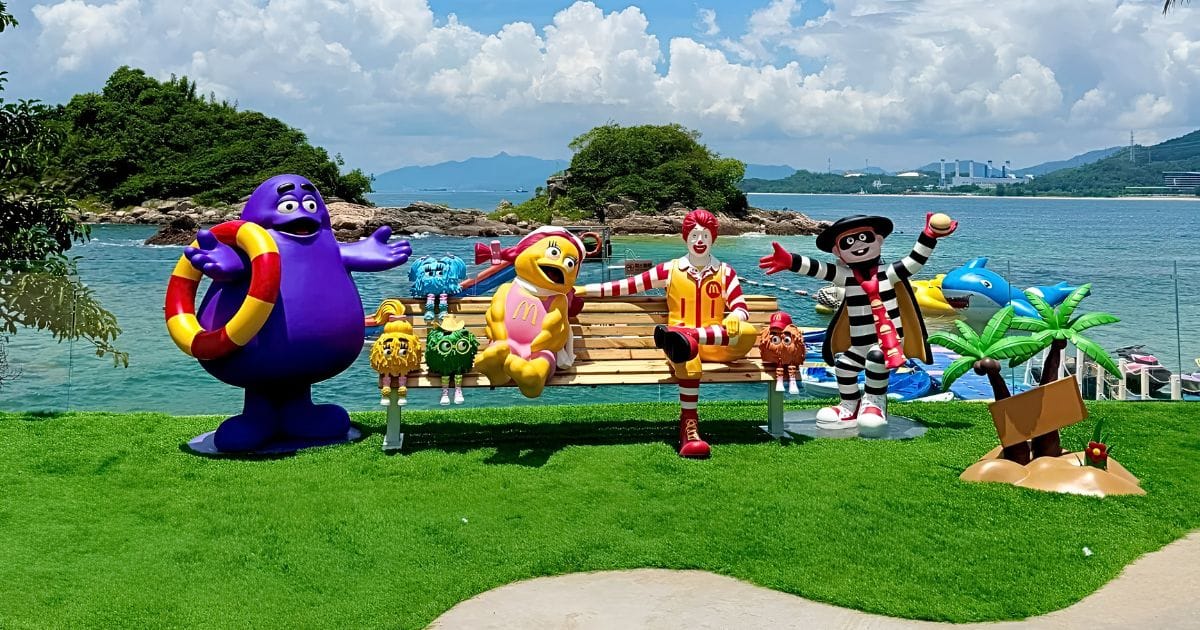
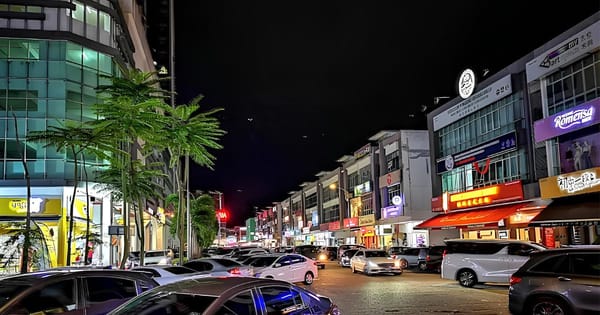
Walk the alleys of Shapoutou after dark, deep inside Shenzhen's Futian district, and the lamps glowing overhead are shaped like hamburgers. Four kilometres away, a six-storey building has been dressed to look like a Happy Meal box.
Shenzhen has been McDonald's home city in China since 1990, and over the past two years the chain has turned that history into places visitors can walk into: a museum, a flagship restaurant inside a 360-year-old village, and an entire working neighbourhood redressed in golden arches. Sitting within about half an hour of the Hong Kong border crossings, all of it is free to enter.
It Began on Dongmen, in 1990
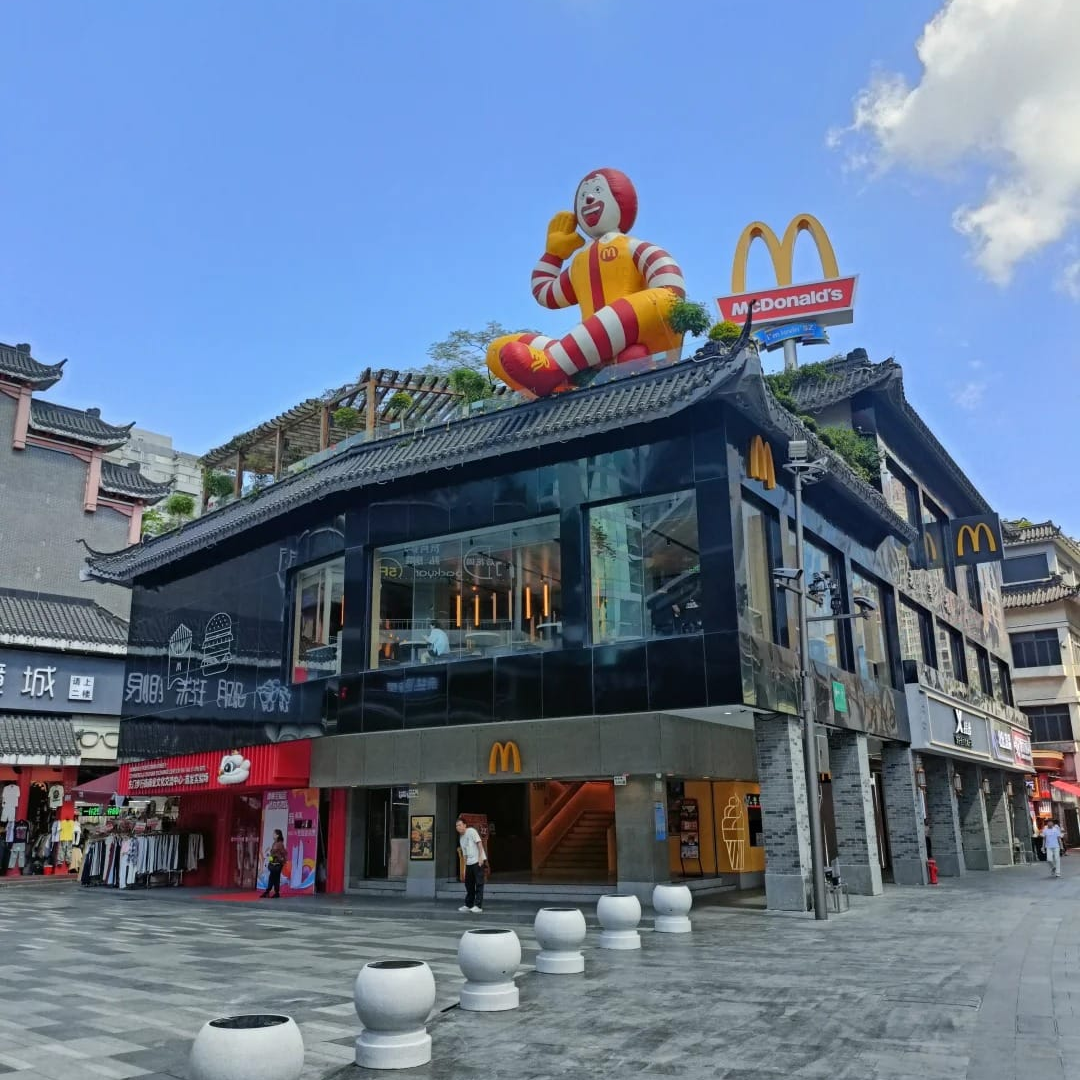
Mainland China's first McDonald's opened on 8 October 1990 in the Guanghua Building, on Jiefang Road at the edge of Luohu's Dongmen pedestrian street.
The numbers from that first day still read strangely. The restaurant had around 500 seats, and they were fully packed. Twenty cash registers were not enough. Shenzhen news described the queue running from the second floor down to the ground floor, out through the lobby, and into the open plaza outside.
It is still operating today as the Guanghua restaurant, a two-storey fast food restaurant on a street that has been a market for three centuries, just a couple of minutes from Laojie station on Metro lines 1 and 3.
A Museum Built to Look Like a Happy Meal Box
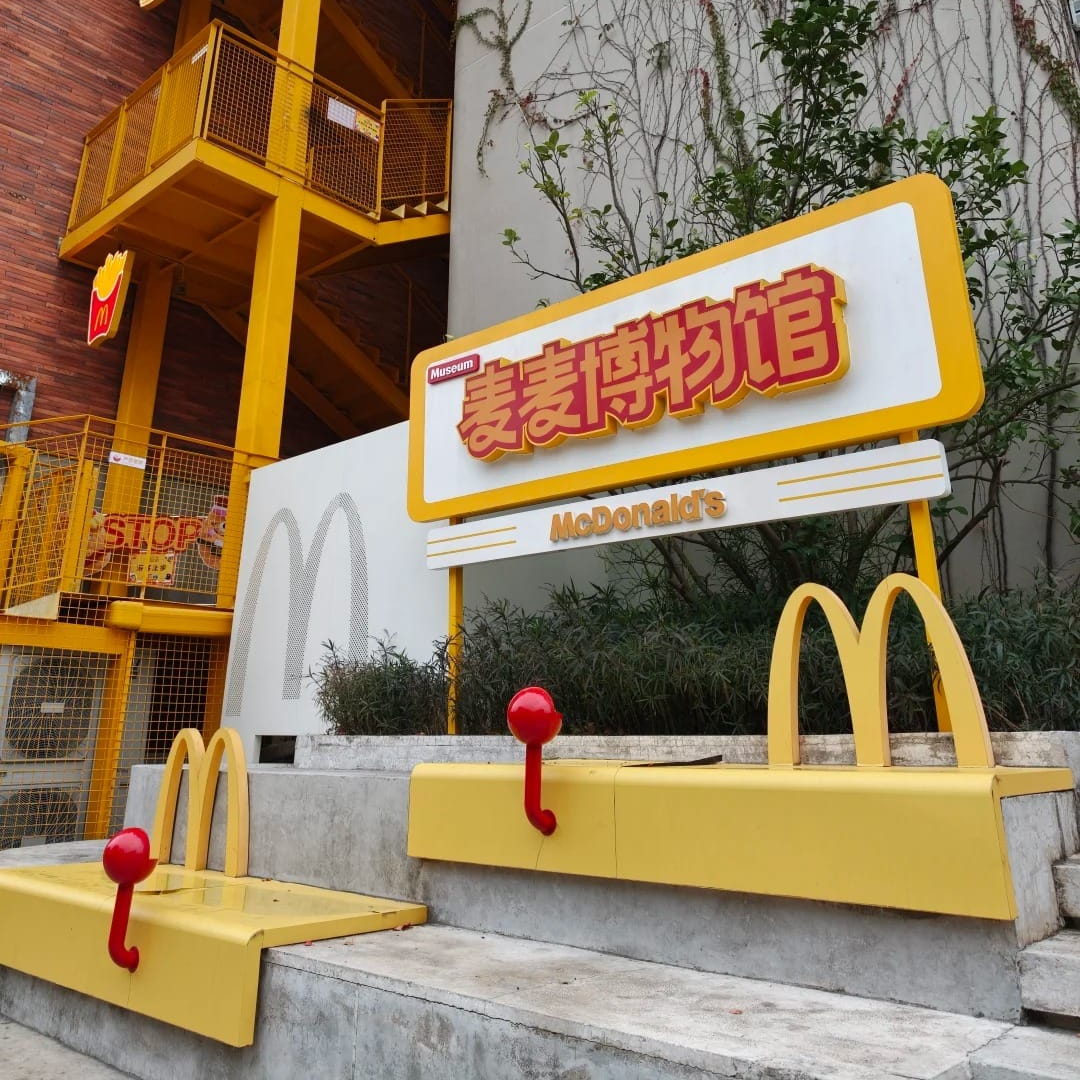
The McMc Museum opened on 12 June 2025 inside A Park, a converted factory complex in Xiameilin. It is the first McDonald's museum in China and the fourth in the world.
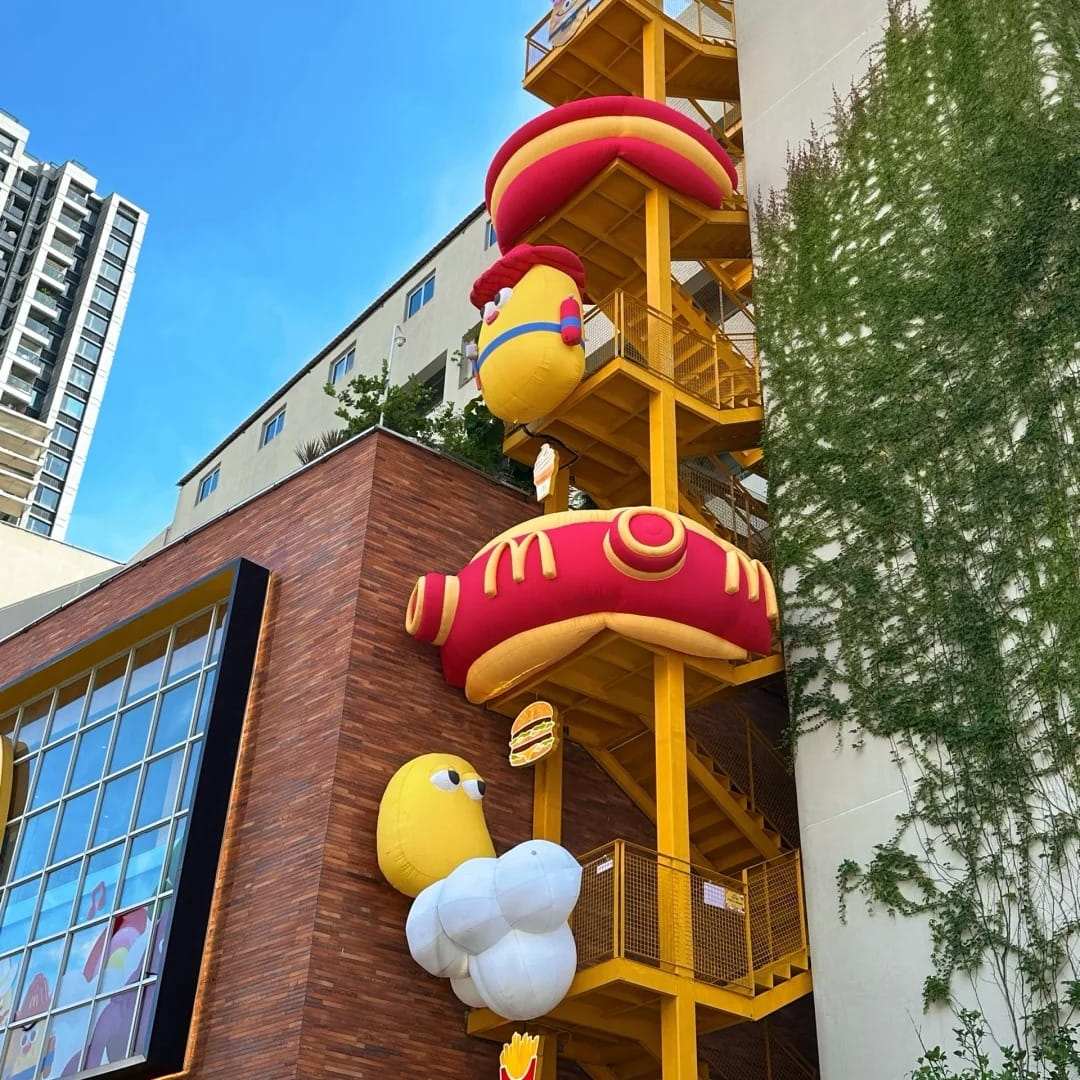
Six floors climb around a bright yellow zigzag staircase hung with McNuggets inflatables and time capsules. The collection runs from the 1990s to the present: a wall of limited-edition toys arranged like an archaeological dig, vintage milkshake cups, millennium-era Snoopy collaborations, Tom & Jerry and Hello Kitty tie-ins, and recreated birthday-party corners with orange sofas and burger stools.
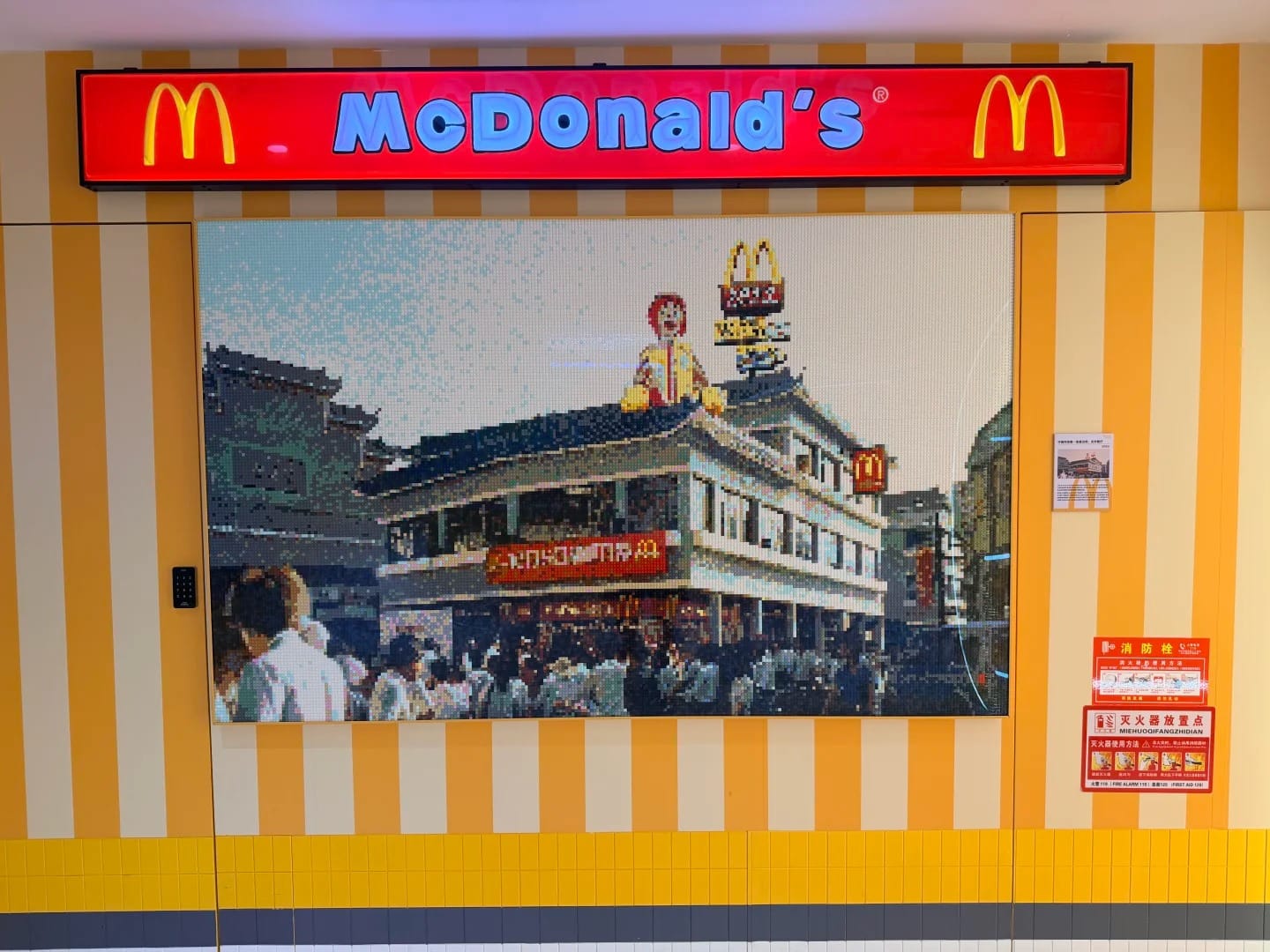
There are also historical photographs of the Dongmen restaurant on opening day. Labelling throughout is in Chinese only, so a phone camera translator might be useful here. Entry is free, and the museum runs from 10.30am to 8pm. Take Metro Line 9 to Xiameilin, Exit A. A museum-exclusive combo is also sold on site.
The 360-Year-Old Village That Became a Flagship
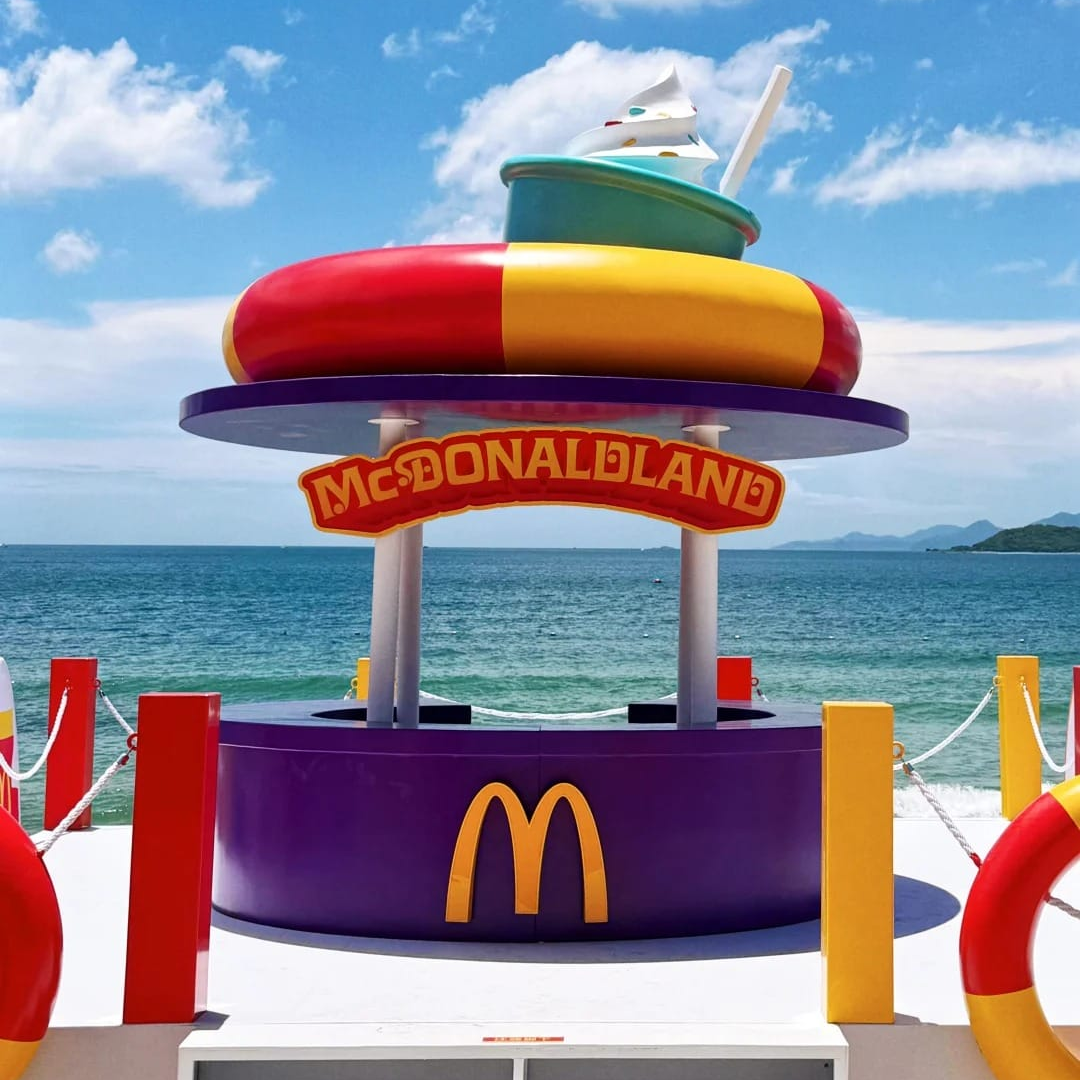
Tianmian International Creative Town is a redevelopment of a village founded roughly 360 years ago, and Building 11 now holds McMc Island — the only flagship of its kind in Shenzhen. It opened in August 2025, and Hong Kong media promptly christened it the world's first McDonald's village.
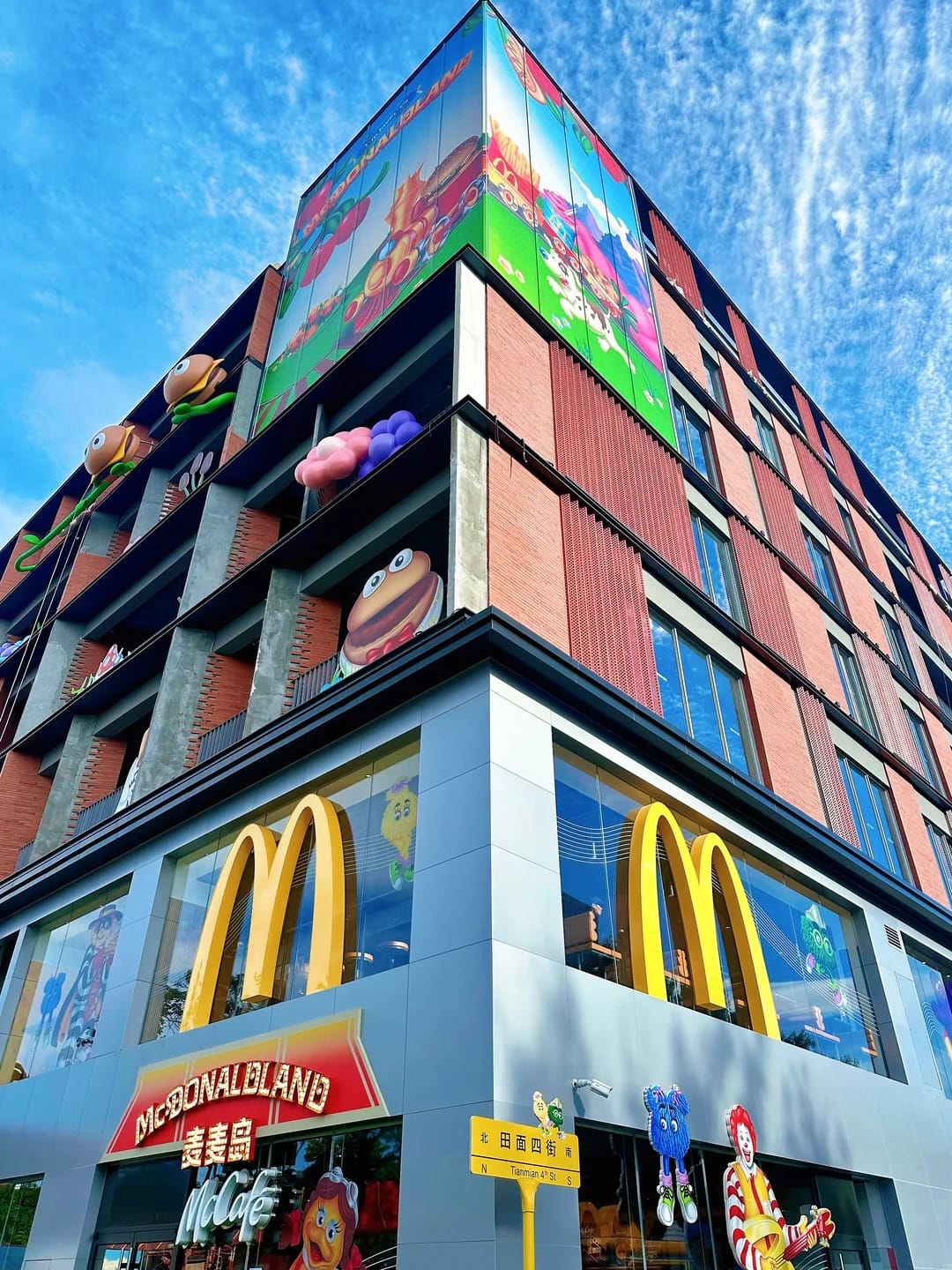
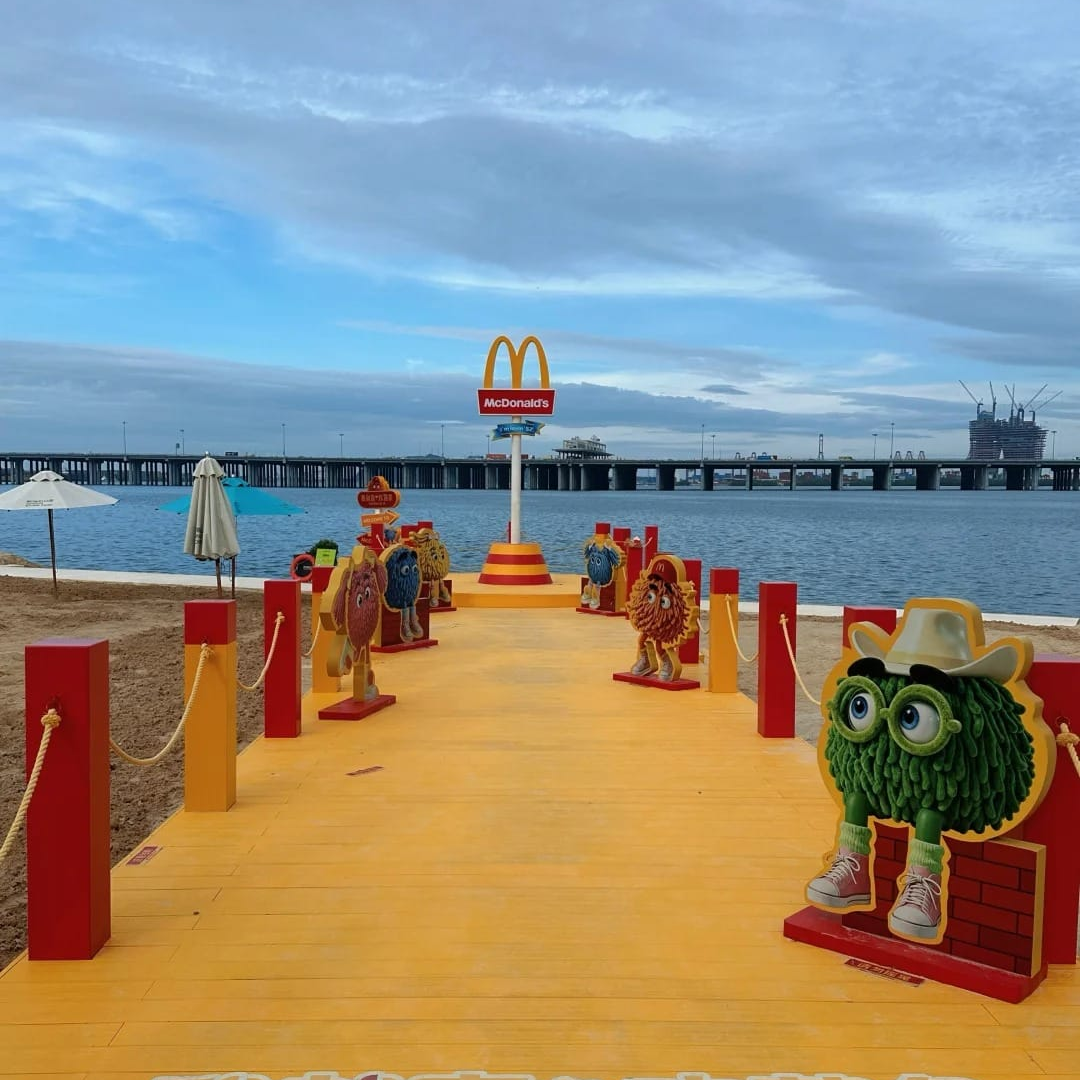
The facade is the draw: oversized three-dimensional burgers and planted greenery climbing the walls of what was once an industrial block. Inside are character benches, meeting points, and photo installations built around the mascots.
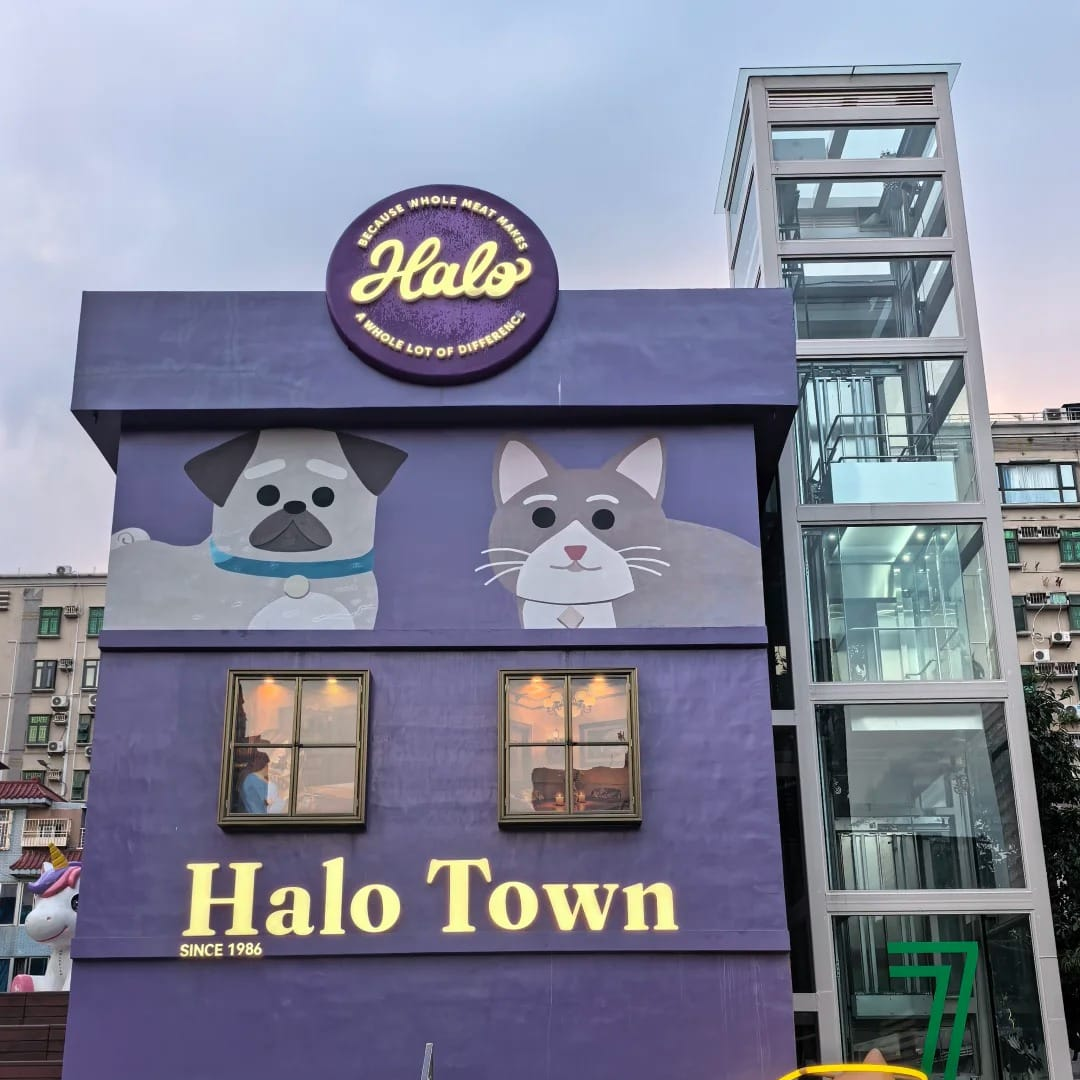
The rest of the town is worth the trip on its own. Xianyu, the secondhand marketplace, runs a two-floor circular store here billed as the largest of its kind in the country, with electronics downstairs and pre-owned collectables and luxury goods above. Halo Town is dog-friendly and several cafes pour mate tea, which is still unusual in Shenzhen. Admission is free and no bookings needed. However, getting there takes a little patience: Gangxia North on Line 11, Exit 15, then a walk of about 900 metres. A taxi from Futian's main malls would take mere minutes.
Burger and Fries Lamps Over a McDonald's-themed Neighbourhood
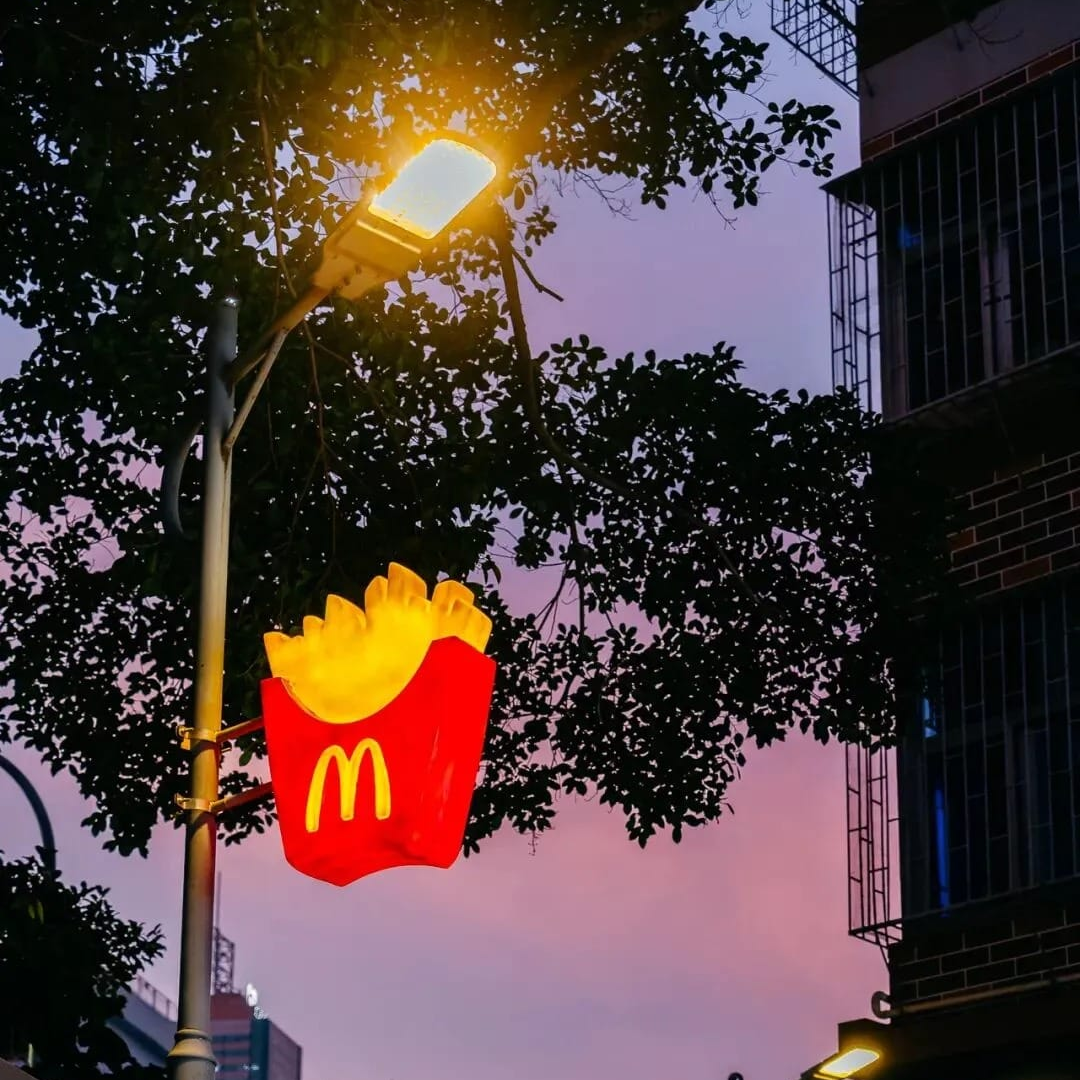
The newest of the three is also the least touristy. On 30 May 2026, two days before Children's Day, McDonald's and the Shapoutou community in Nanyuan subdistrict unveiled what is billed as China's first McDonald's-themed neighbourhood.
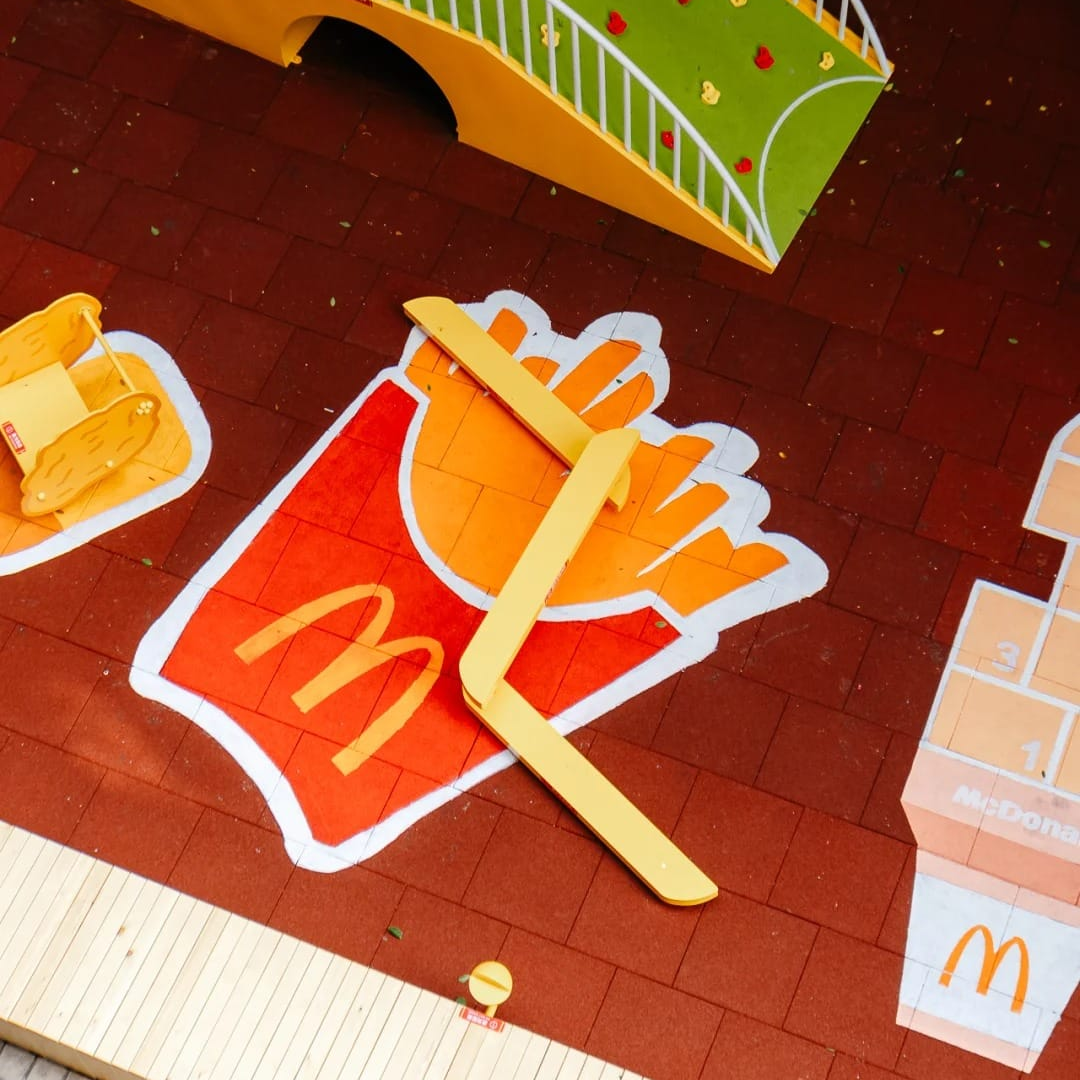
Shapoutou is an urban village — one of the dense, affordable, deeply lived-in blocks that house much of the workforce that built the rest of Shenzhen. The additions are practical as much as decorative: fries-shaped light boxes to guide people down the lanes at night, a painted children's play area, and themed stations — branded "Dream Hub" — set aside for construction workers and delivery riders.
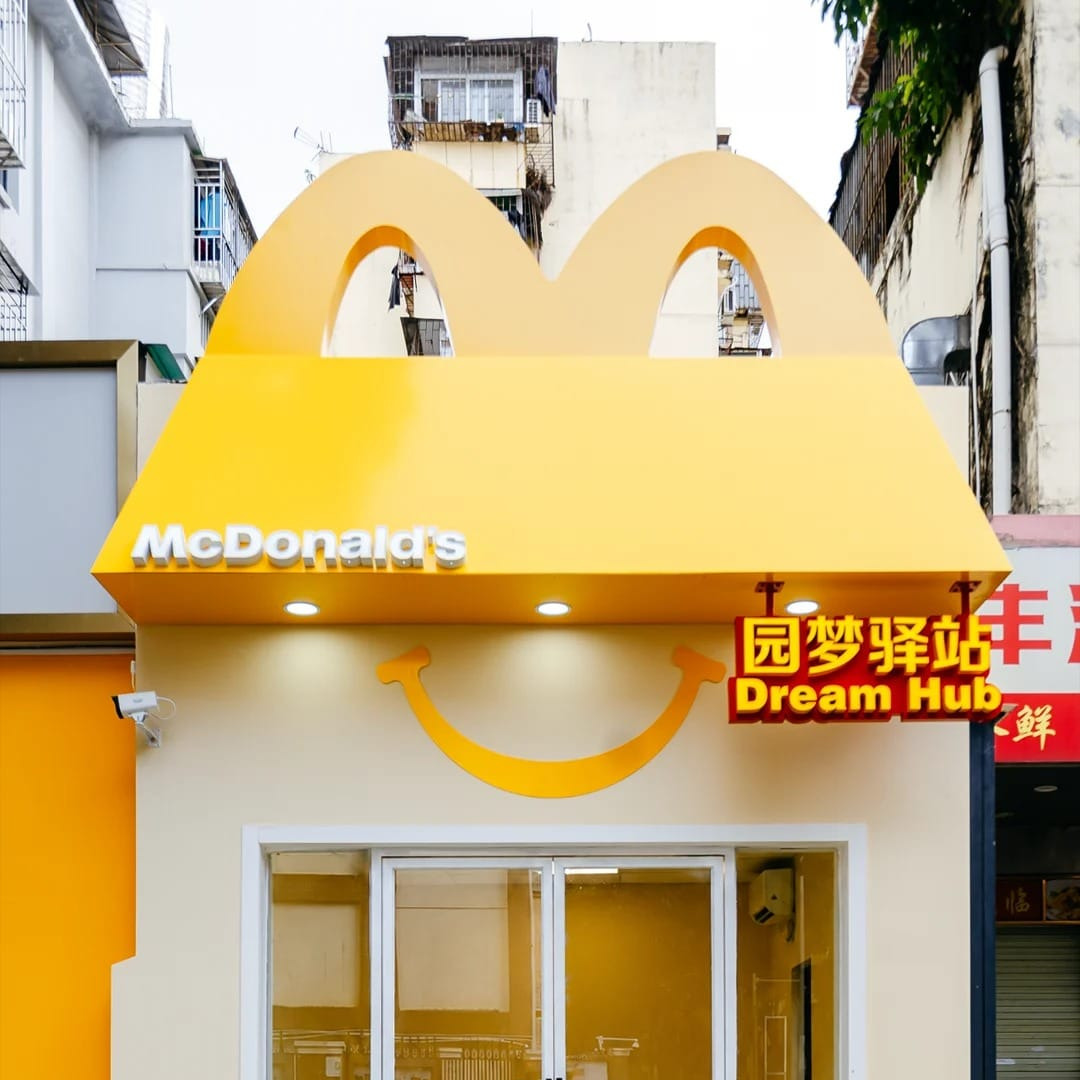
The choice of neighbourhood was not random. Nanyuan subdistrict has six McDonald's, the first of which opened in 1992. the project was framed as turning the brand's ideas about companionship into something residents pass through daily rather than visit.
Tourists and visitors should read the room accordingly, as this is somebody's street, busiest during peak hours, and the lamps look their best lit up after dark.
Doing All of It in One Day
All four sites sit in Futian or Luohu and connect by metro. A workable itinerary is Guanghua in Luohu first for the origin story, then Xiameilin for the museum around lunch, Tianmian in the late afternoon when the creative town fills up and the facade photographs well, and Shapoutou once the burger lamps come on.
Weekends and Chinese school holidays fill the museum quickly, so a weekday morning is the calmer option. Entry everywhere is free, which means the only real expense is food — and each site sells something special the others do not. Mobile payment is near-universal in China; a linked overseas card on Alipay or WeChat Pay will smooth your trip considerably.
Who This Is For
This is a day out for people who find brand archaeology interesting — the way a foreign chain landed in 1990 and fit in so well that a neighbourhood now wears it as decoration. Families get the most out of it, design-minded travellers get the flagship and the creative town, and anyone curious about how Shenzhen recycles its old villages gets two different perspectives in Tianmian and Shapoutou.