Nordland Line - This Train Slows Down at the Arctic Edge

Somewhere on the treeless plateau north of Mo i Rana, the landscape falls silent. An announcement crackles through the carriages, phones come out, and passengers press against the windows. A globe marking the Arctic Circle slips past. The Nordland Line has crossed 66°33′ north.
Norway’s longest railway runs 729 kilometres from Trondheim to Bodø and takes around 10 hours to cover. Tour operators market it as an Arctic Circle and Northern Lights journey in winter and a midnight-sun train in summer. It is also the only railway in Norway to cross the Arctic Circle. This is what the journey looks like, and what to know before booking.
A Railway Built in Hell
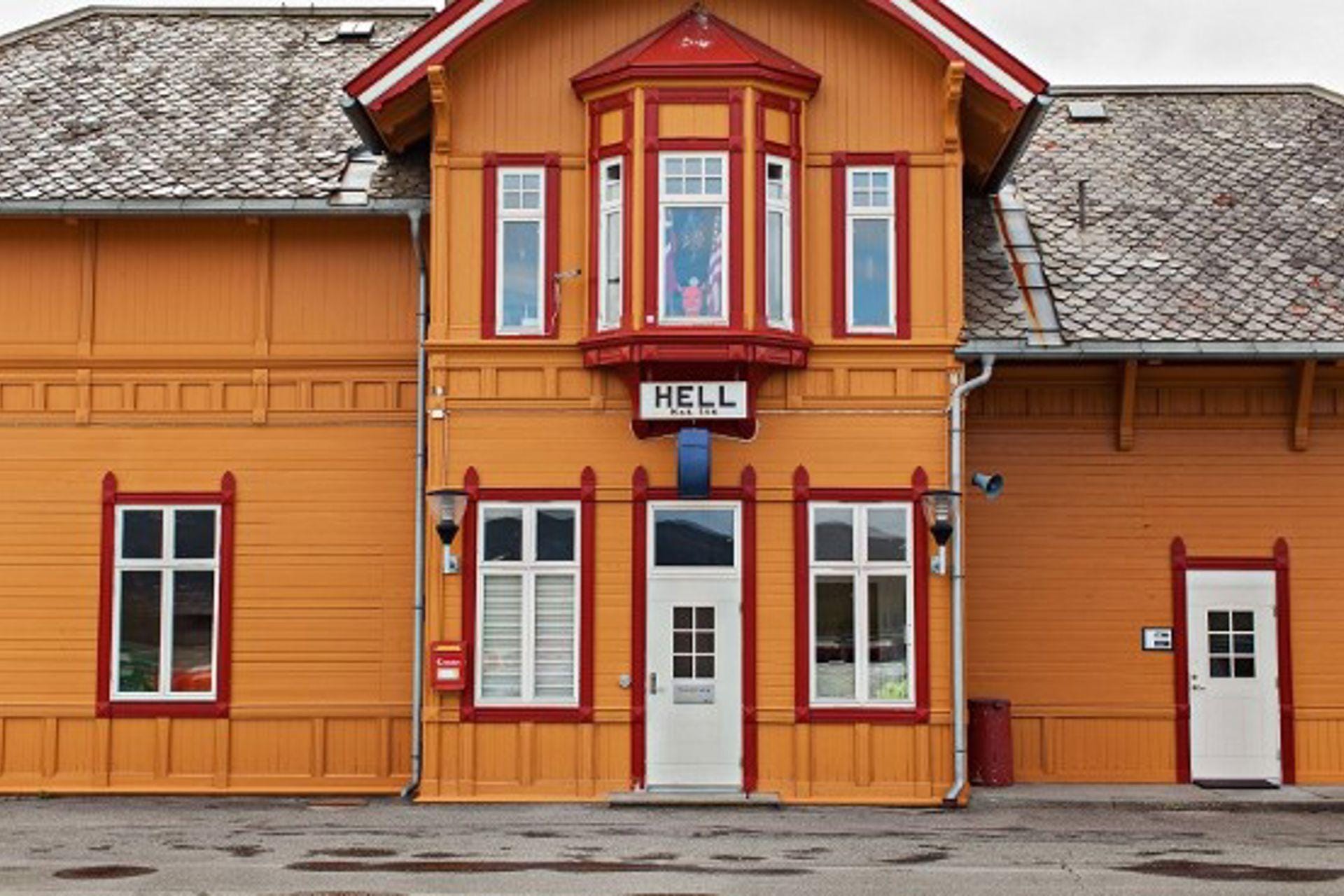
Thirty-one kilometres from Trondheim, the train calls at Hell. The name comes from a local word for a rock overhang, but the station sign has understandably been photographed by generations of travellers regardless.
Hell was the end of the line when the first section opened in 1882. It took another 80 years for the railway to reach Bodø. Passenger trains arrived on 1 February 1962, and King Olav V performed the official opening that June.
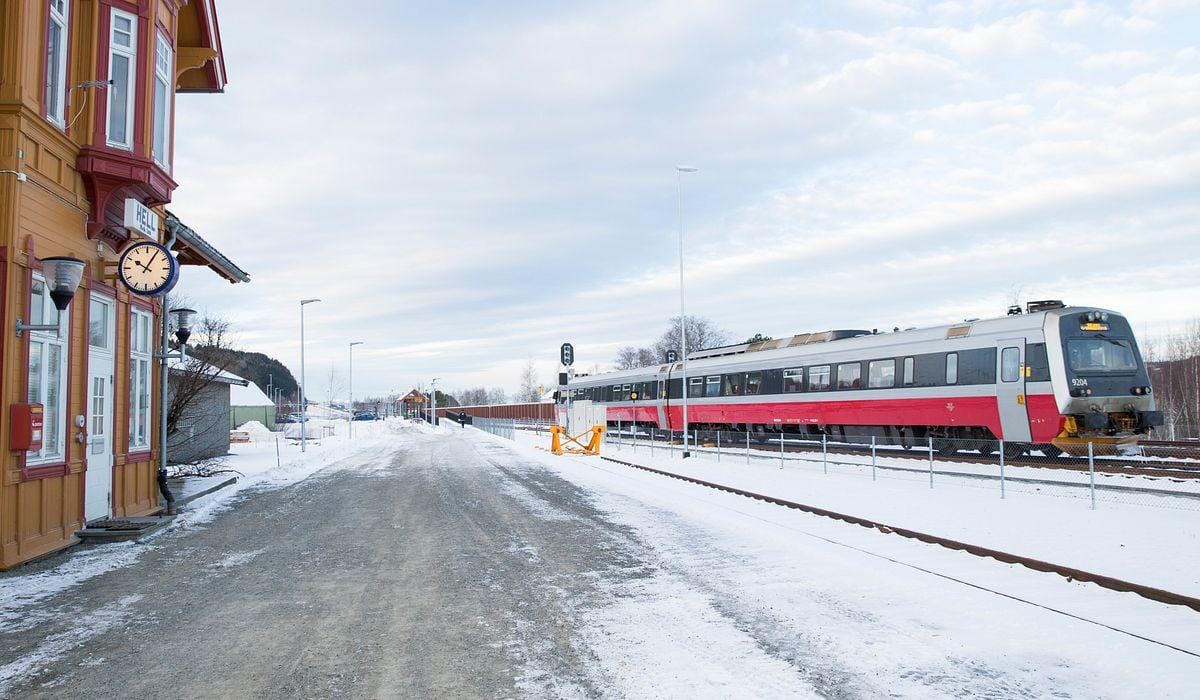
Today, the route remains largely single-track, with 154 tunnels and 293 bridges along the way. It is mostly diesel-operated, although the section between Trondheim and Hell has been electrified.
The Railway’s Darkest Chapter
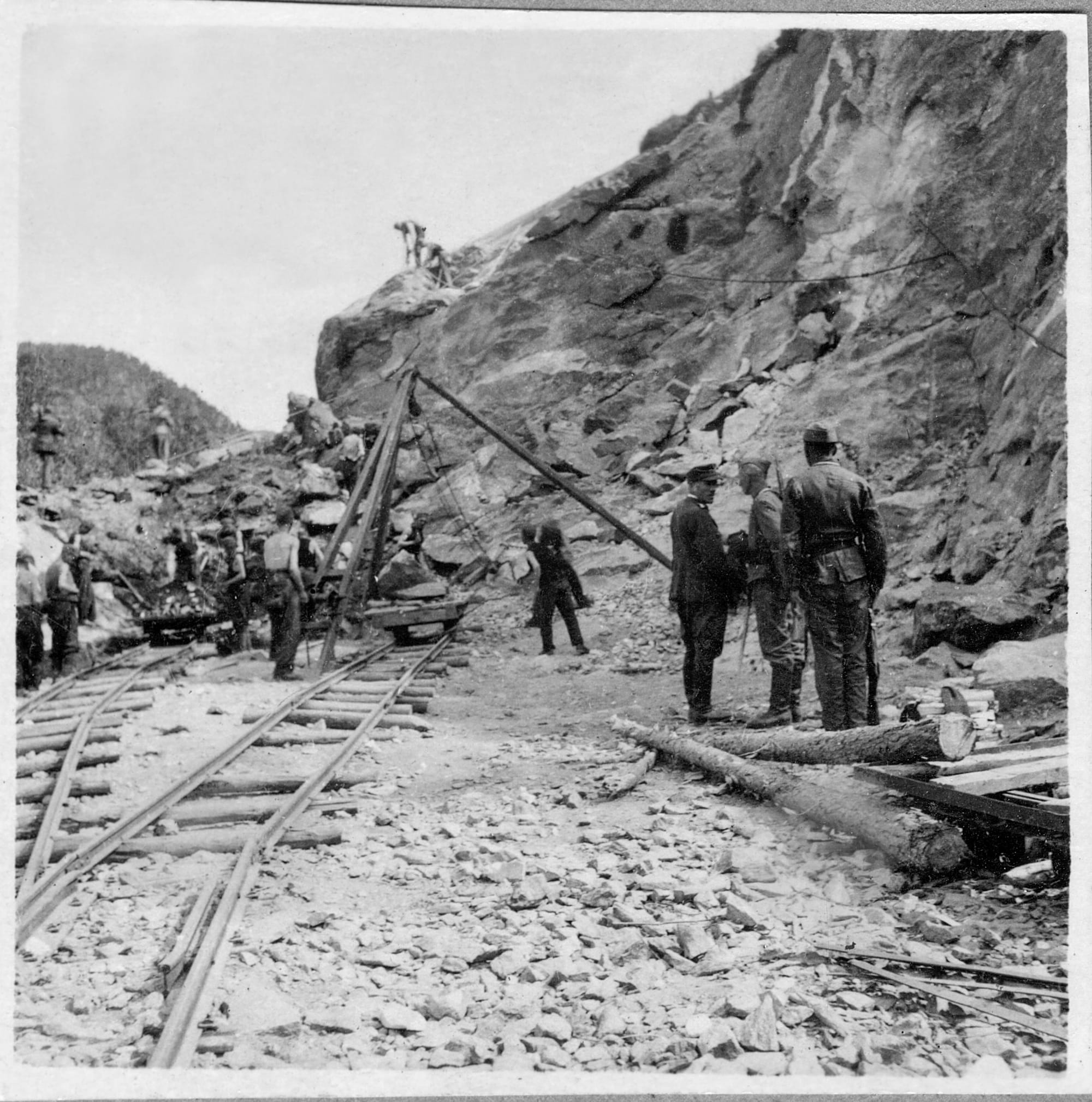
The middle of the line has a darker history. When Germany occupied Norway in 1940, the Wehrmacht took over construction and pushed the railway north as a military priority. From September 1942, the workforce was supplemented by prisoners of war.
By 1945, 21,600 prisoners were working on the Nordland and Polar Lines, spread across 47 camps. Around one in ten did not survive.
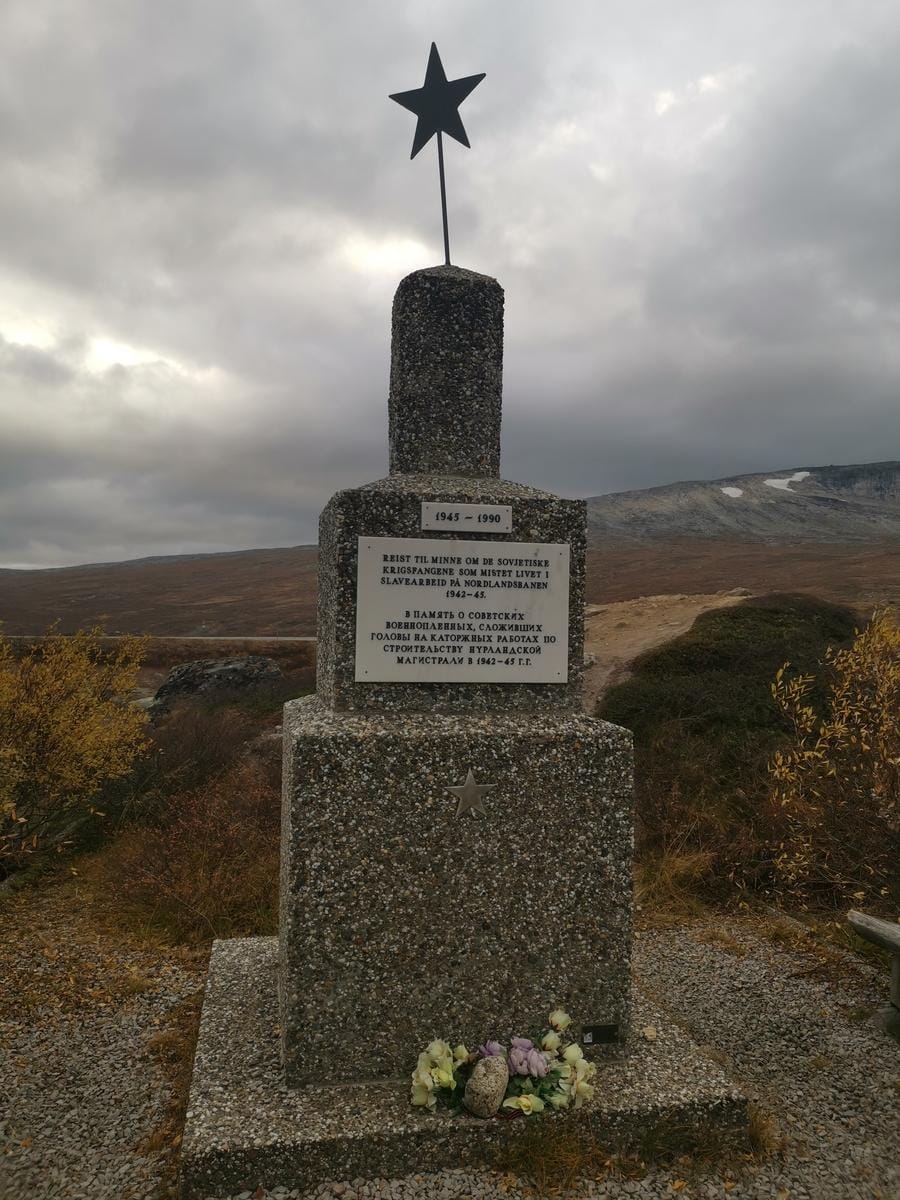
Norwegians came to call it blodbanen — the blood railway. A memorial stone unveiled at Storvoll in June 1945 honours the roughly 5,000 Soviet prisoners who worked on the Rana section.
It is worth knowing this history before the scenery north of Mo i Rana takes over.
Fjords, Forest and Open Mountain
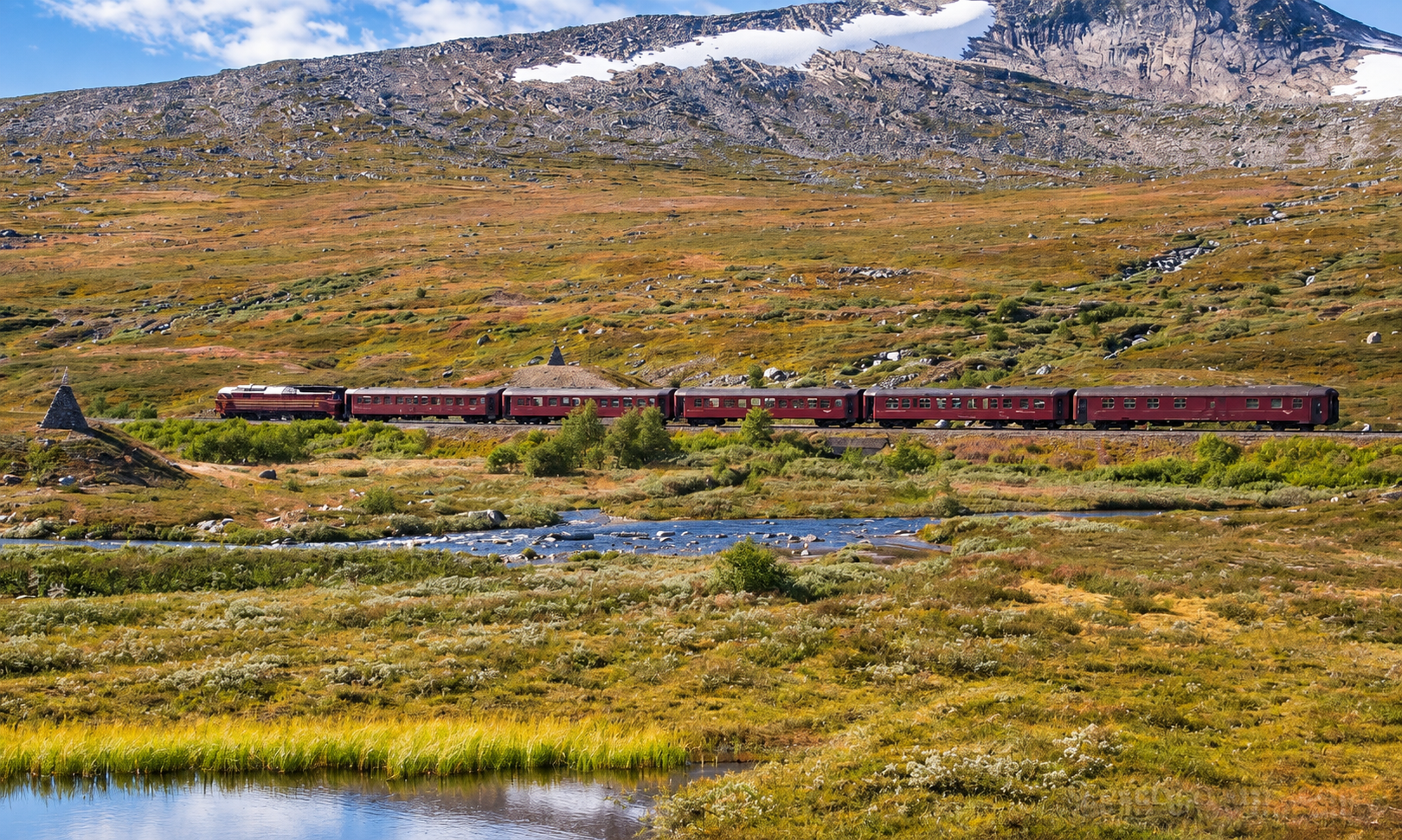
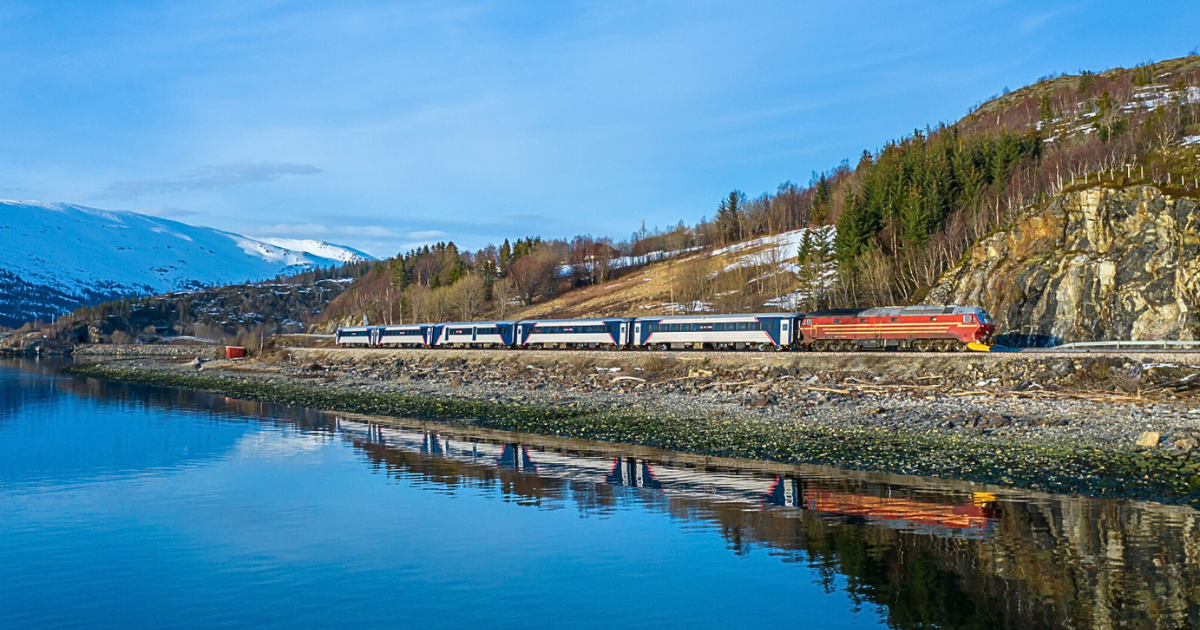
The landscape changes in stages. From Trondheim, the line follows the Trondheimsfjord for about two hours to Steinkjer, then turns inland through the forests and lakes of Namdalen. It reaches Mosjøen at sea level, where the old trading street of Sjøgata is lined with 19th-century wooden warehouses. Mo i Rana follows, serving as a base for visits to the Svartisen glacier.
Then comes the climb.
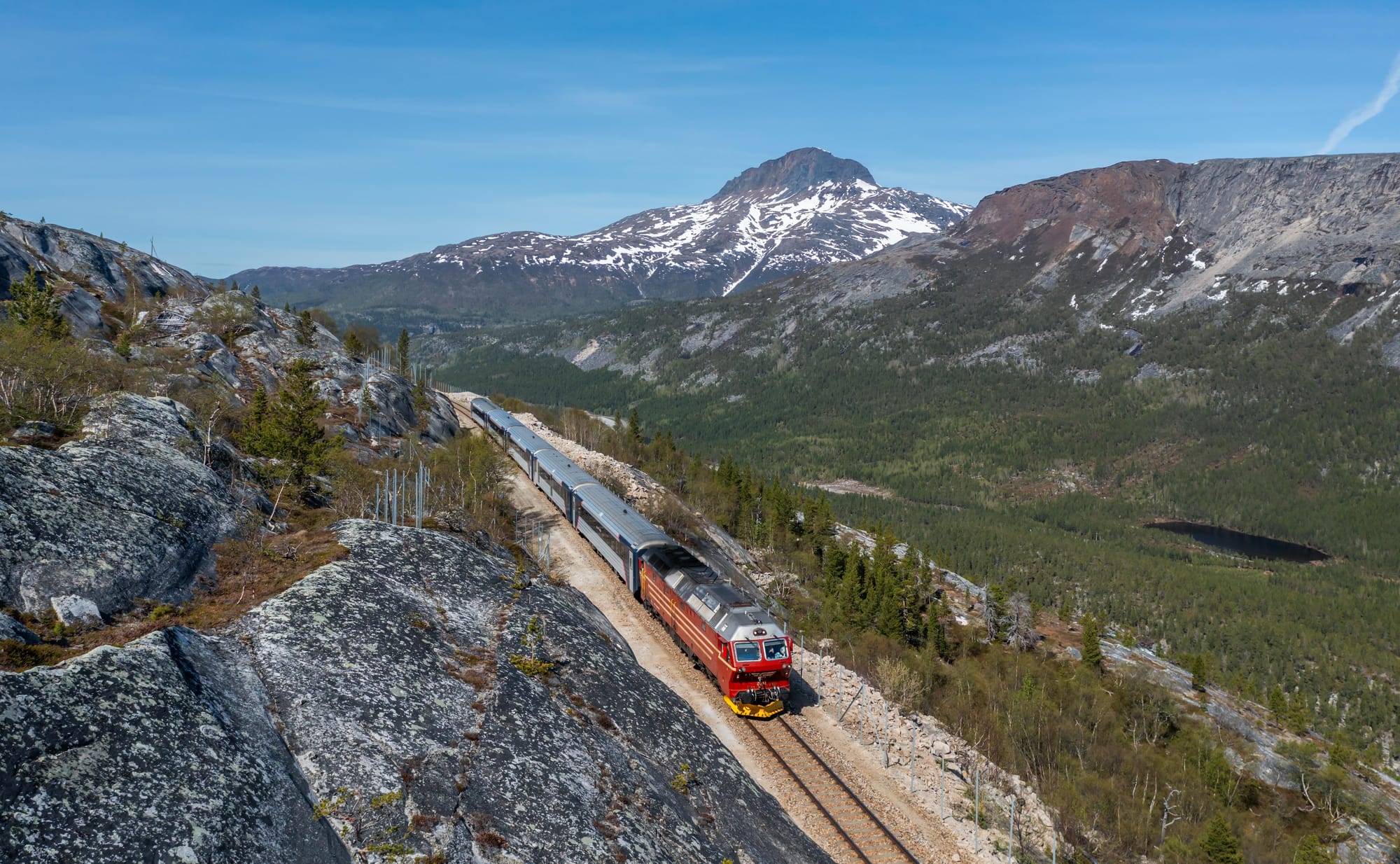
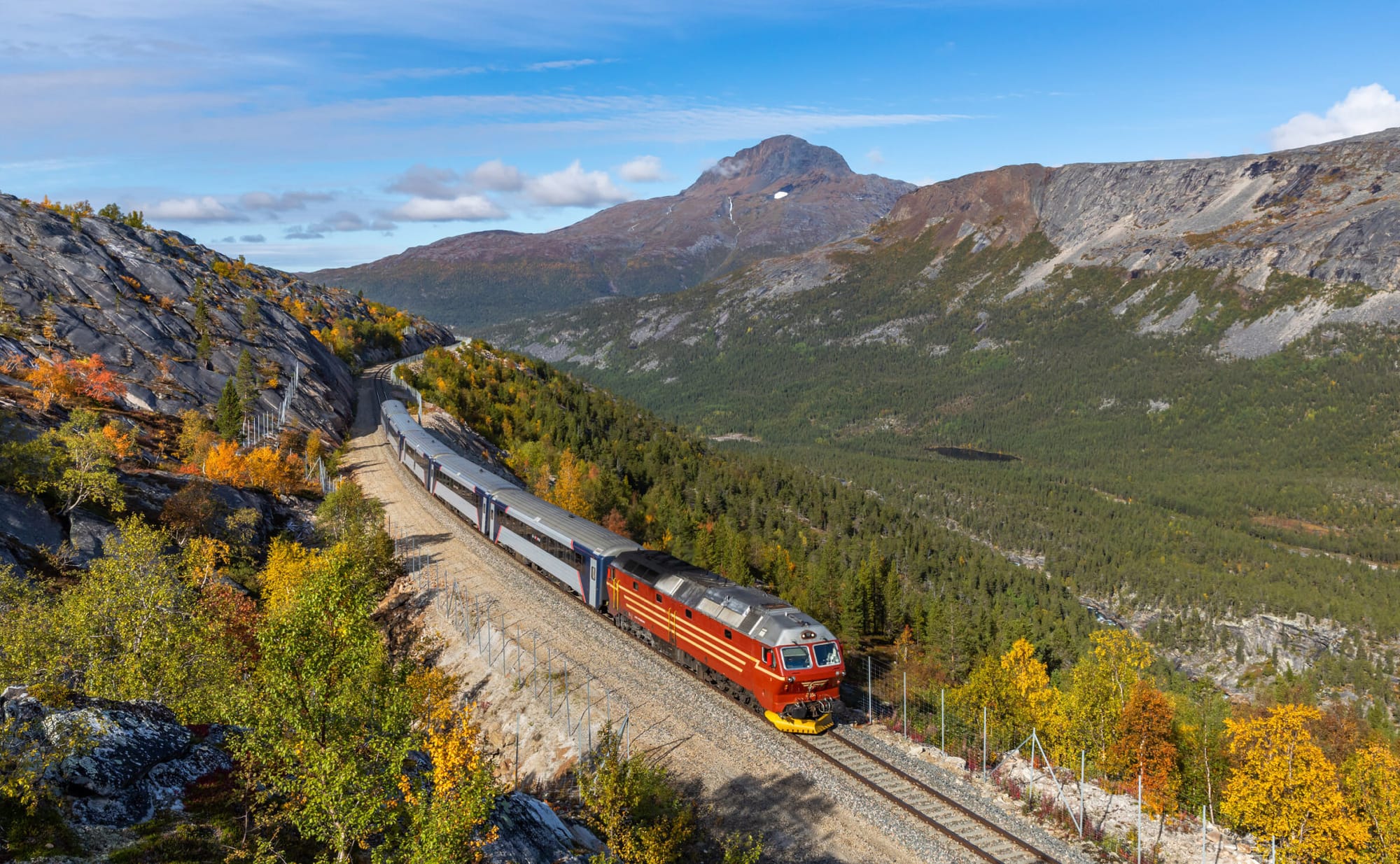
From Dunderland, the track rises at a 1.8 percent gradient for 38.5 kilometres onto the Saltfjellet plateau. The trees gradually disappear. The line reaches its highest point, 680 metres above sea level, just south of Stødi, before dropping for around 40 kilometres towards the fjord at Rognan.
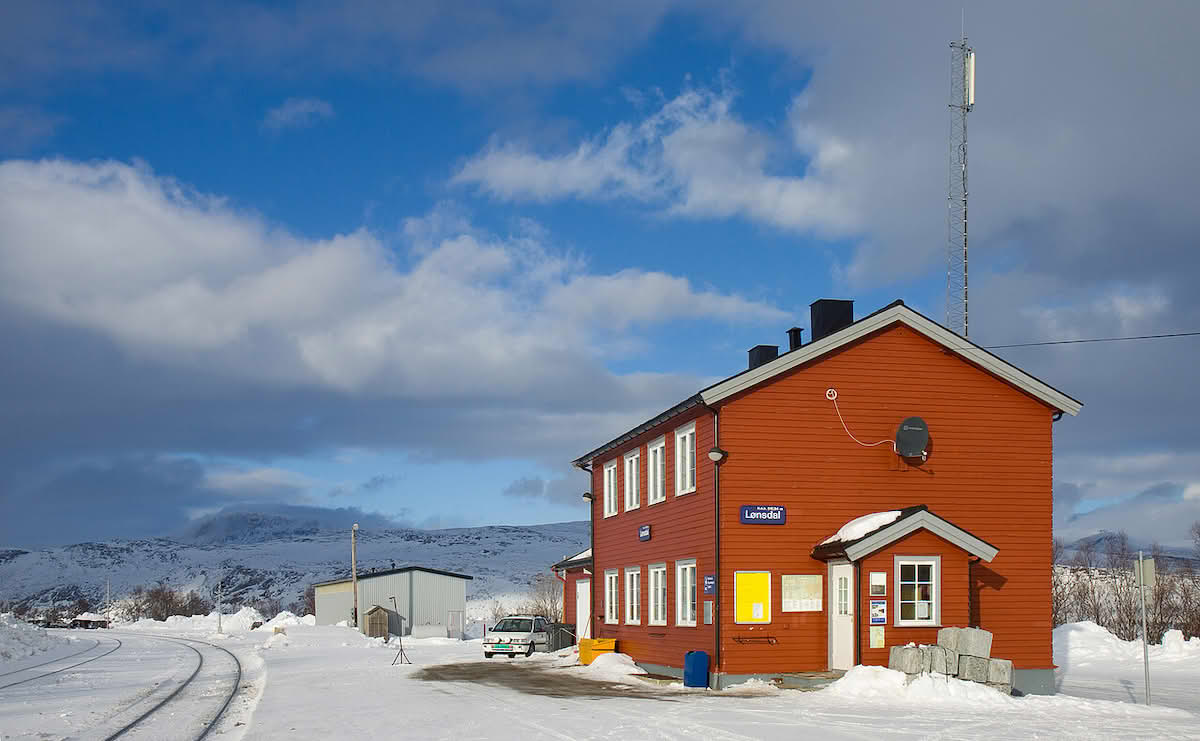
Lønsdal, on the plateau, is a gateway to Saltfjellet-Svartisen National Park and its hiking trails.
What the Ride is Like

The day service is locomotive-hauled, with conventional carriages rather than a regional railcar. SJ Norge operates a café carriage serving hot food, a Premium Pluss section with reclining seats and footrests, and a family carriage. On the full Trondheim–Bodø service, you leave in the morning and arrive in the late afternoon.
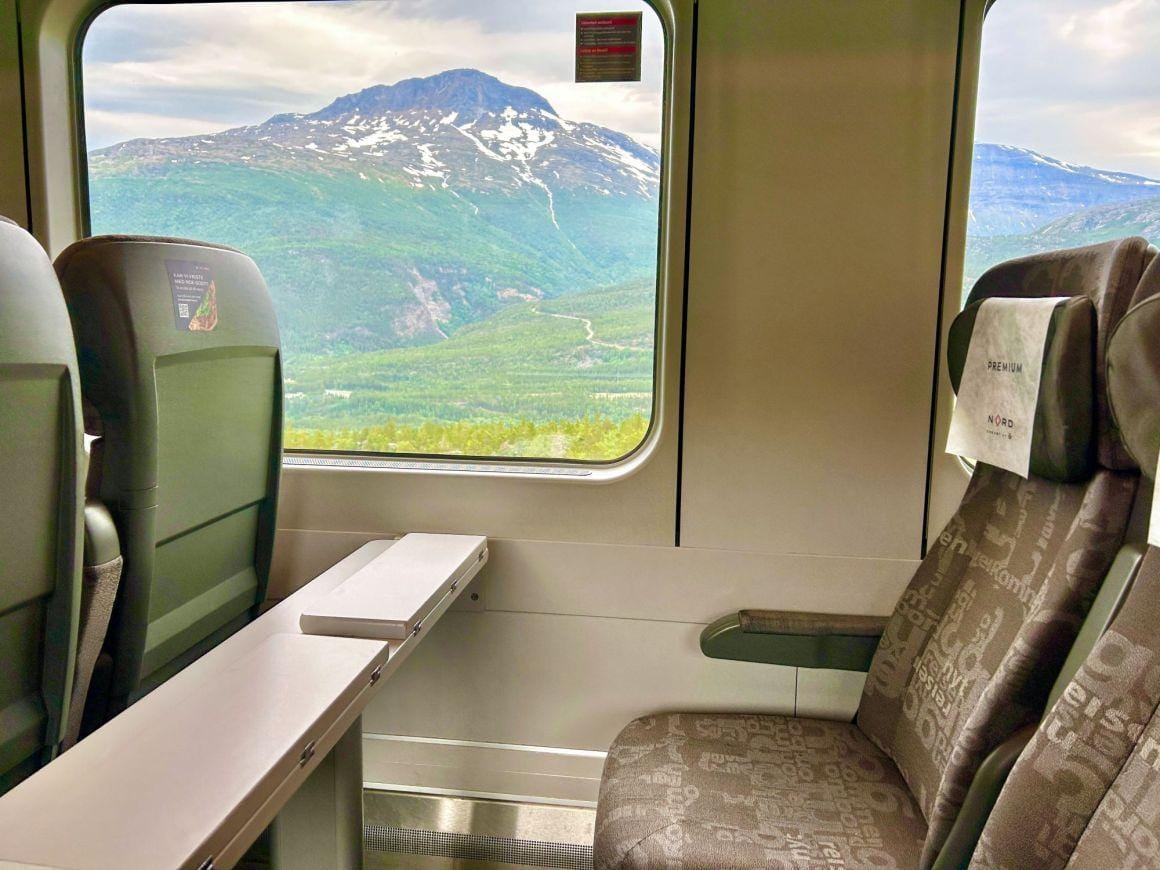
Two practical notes are worth knowing. Passengers have reported limited power sockets on board, so a charged power bank is useful. Mobile coverage also drops out for long stretches in the north, which can affect cashless vending on some services. Download anything you might need before reaching Grong.
The journey has even been turned into slow television. In 2012, NRK filmed the entire Trondheim–Bodø ride four times, once in each season, and combined the footage into a single synchronised programme. Around 1.2 million Norwegians watched it.
Crossing the Arctic Circle
An honest note on the “Northern Lights train” label: the day service runs in daylight for much of the year, and there is no guarantee of seeing the aurora from a carriage window. What the railway does is carry travellers deep into northern Norway without requiring a flight or a long drive.
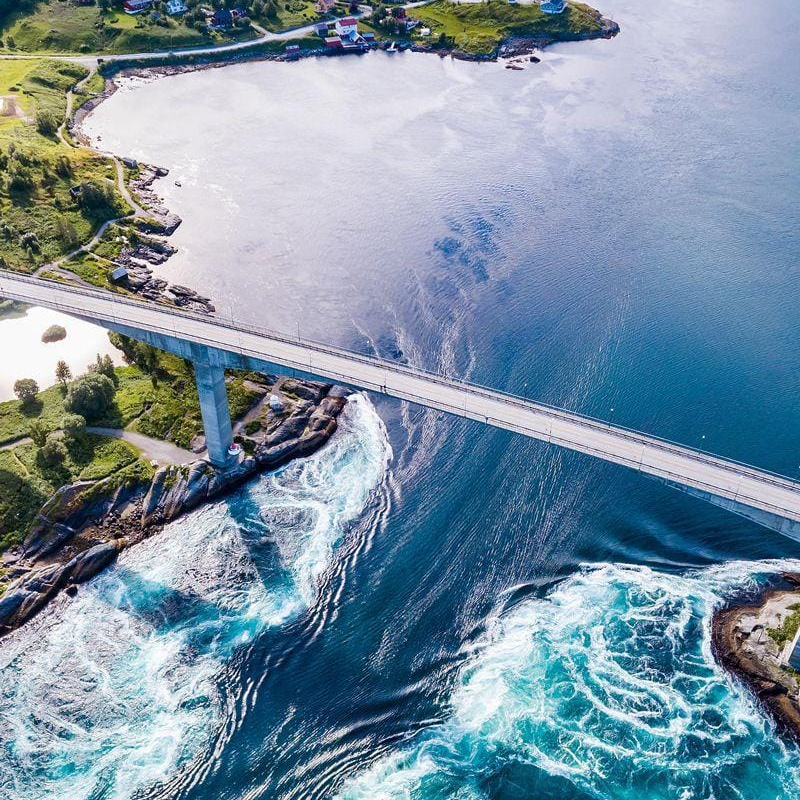
The line crosses the Arctic Circle on Saltfjellet, where an announcement plays over the loudspeakers and stone markers beside the tracks mark the crossing. Two stops before Bodø, Tverlandet is about 15 minutes from Saltstraumen, famous for its powerful tidal currents. Bodø itself was European Capital of Culture in 2024 and is the ferry gateway to the Lofoten Islands.
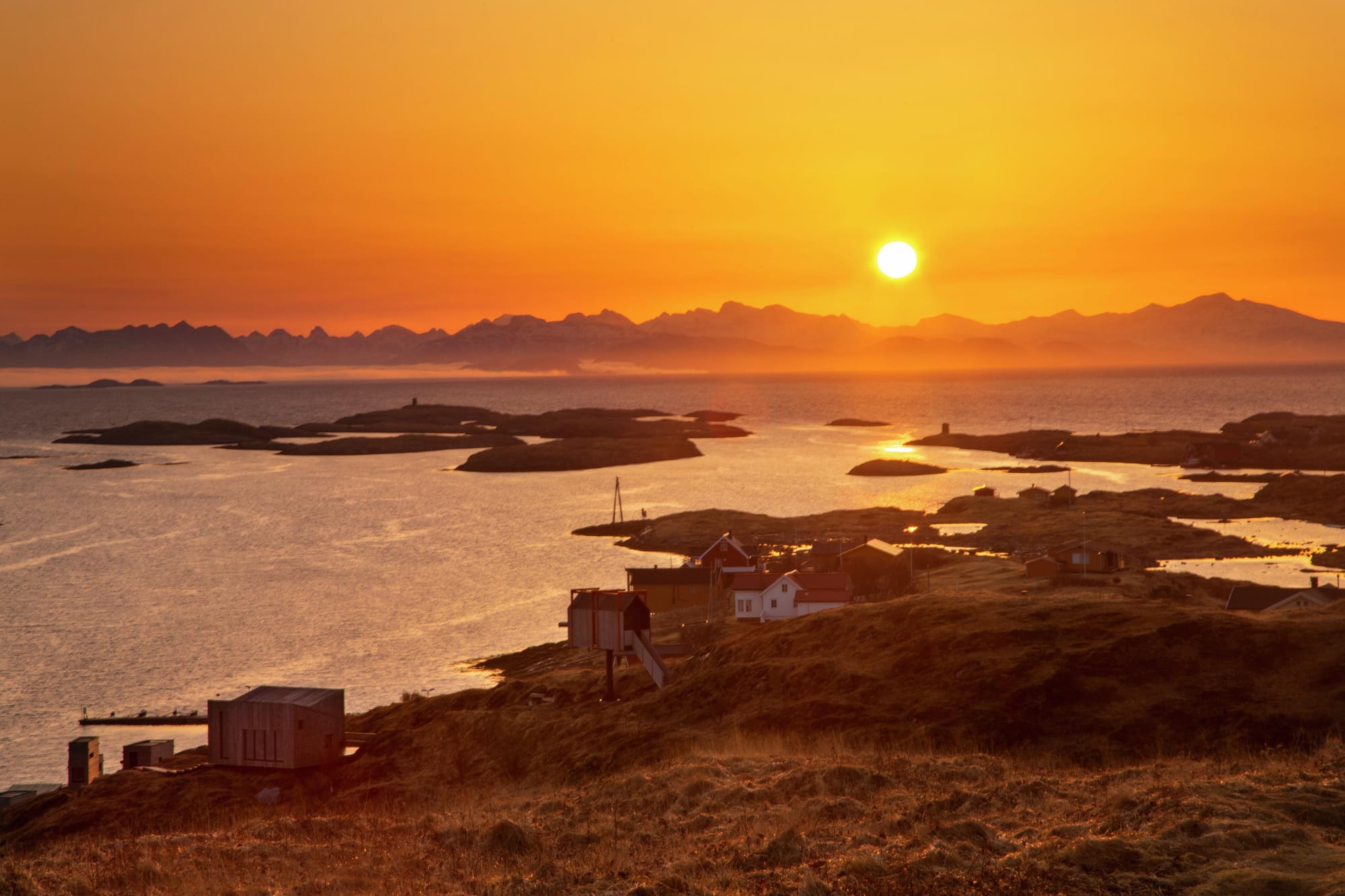
For Tromsø, travellers can continue north from Fauske by bus. In summer, the experience changes completely: from late spring into midsummer, the northern part of the route enjoys the midnight sun.
Planning the Journey
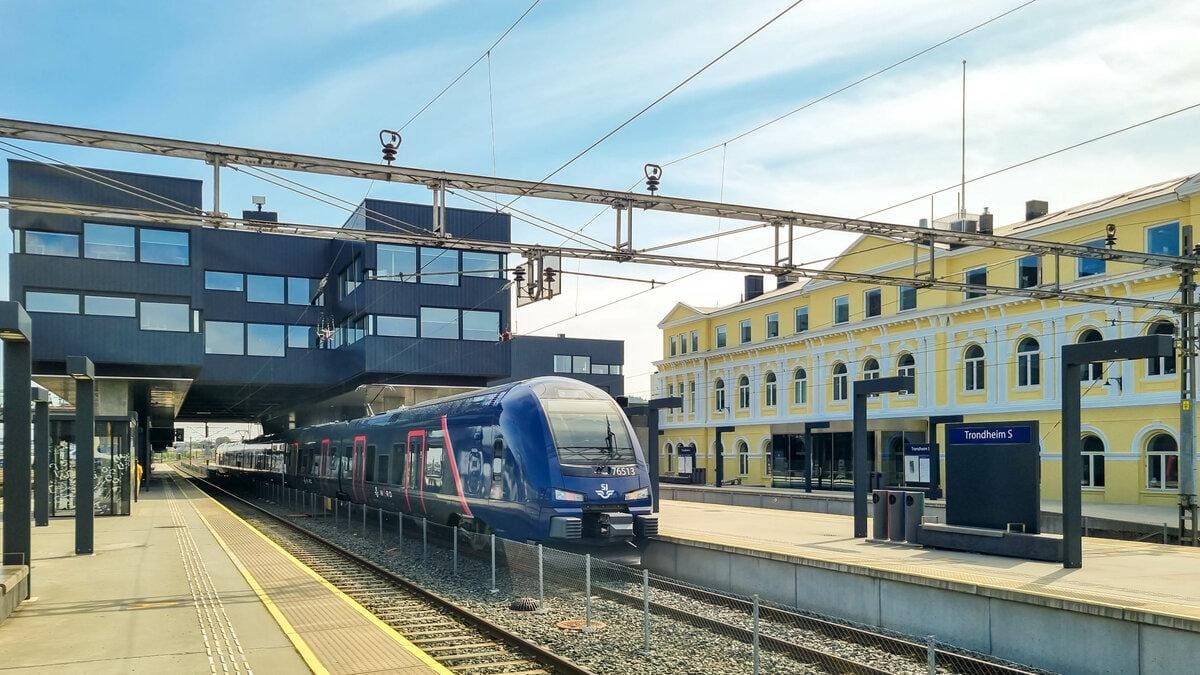
The Nordland Line reopened for through service between Trondheim and Bodø on 22 June 2026, ten months after a landslide near Nesvatnet in Levanger shut the line. Temporary closures and replacement buses can still occur during planned works, so check SJ Norge or Entur for your travel date.
The night train, which has been out of service because of a locomotive shortage, does not yet have a confirmed restart date. SJ currently says it expects the service to return during autumn 2026, pending final approvals and training.
Tickets are sold through SJ Norge and Norway’s national Entur journey planner. Entur says tickets are generally released at least 90 days before departure, although this can vary around timetable changes and planned works.
From Oslo, the journey can be done entirely by rail by connecting with the Dovre Line to Trondheim.
The Nordland Line is for slow travellers who want to reach the Arctic with a window seat and enough time to watch the landscape transform. The scenery is spectacular, but the railway carries another story too: of war, forced labour, engineering and the people who built a route through one of Norway’s harshest landscapes.
While the Arctic Circle is the obvious milestone, the journey there is the real experience.